
Night works
To keep Metro running smoothly for over 30 million passengers every year, Nexus, who operate the Metro, often have to do work on the railway lines during the night.
Most of these tasks can’t be carried out safely while trains are in service and the overhead lines are live. Some work can only be carried out safely in the hours when trains do not run, between midnight and 5.30am.
Engineering and vegetation teams work hard across the network every night, carrying out inspections, maintenance works and clearing litter. Metro is one of the UK’s busiest railways and needs looking after, so some noise and disturbance during the night for neighbours is to be expected.
Night works include:
- Lineside estate work and vegetation management
- Track and overhead line maintenance and renewal
- Station maintenance, cleaning and litter picking
At times emergency works may take place which are not included in the schedule. Due to their nature, Metro are unable to provide advance notice in these situations.
Night work updates cover all parts of the Metro network in Newcastle, Gateshead, North Tyneside and South Tyneside, and stations only between Pelaw and South Hylton. The tracks between Pelaw and South Hylton are owned and maintained by Network Rail and Metro only provide information on station improvement works on this section of the line.
You can keep up to date by signing up to receive weekly night working email updates by contacting Metro Customer Relations
Upcoming night works
Metro night working Monday 7 September 2026 to Sunday 13 September 2026
Metro night working Monday 14 September 2026 to Sunday 20 September 2026
Types of work
A team works round the clock dedicated to removing graffiti, and their work involves the use of high pressure washers and generators.
There are thousands of kilometres of cables running around the Metro network. These run alongside the track and drive Metro’s signalling system, ticket machines and customer information systems. Maintaining and replacing this cabling is essential and can involve heavy machinery to dig new trenches, as well as power tools to cut and lay cables themselves.
Keeping the Metro lines clear of overhanging foliage and trees involves the use of chainsaws and mechanical hedge cutting equipment.
There are five level crossings on the Metro infrastructure and major repairs at these crossings involve replacing the rails and the road surface, using power tools and sometimes heavy machinery.
The overhead power lines supply the electricity Metro trains need to run. These cables need to be kept free of any obstructions and renewed from time to time. Special platforms are used so workers can access these cables. The work itself is not very noisy, but involves a special train moving up the line and people working at height, from which noise may travel further.
Work to station platforms varies from station to station but one common type of work is to repair damage to the platforms and platform edges, done at night using power tools. Structural or safety improvement works might also take place on bridges crossing Metro tracks, or bridges which Metro trains travel on.
All Metro stations are jet-washed every four weeks to keep them clean and odour-free. Because of the amount of water used this can only be done at night when there are no customers about, and requires the use of a generator to power the hoses.
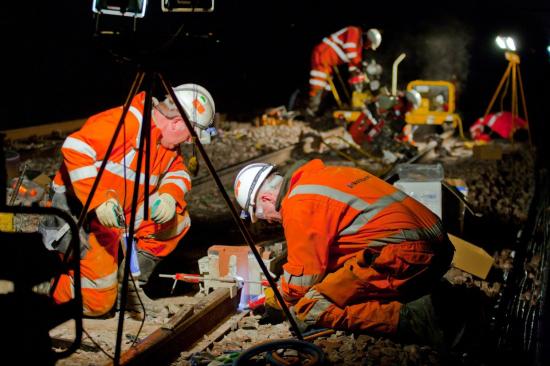
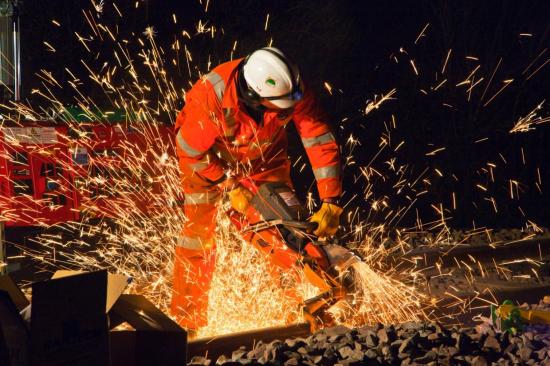
Metro tracks see thousands of trains pass over them every day – this causes wear and tear and eventually the rails need replacing. Track renewal usually involves power tools and heavy machinery to lift rails and concrete sleepers, so will be amongst the noisiest work.
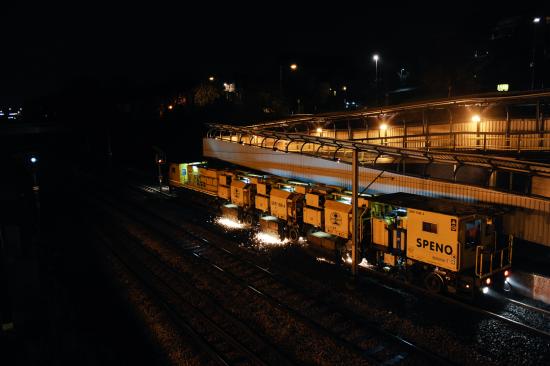
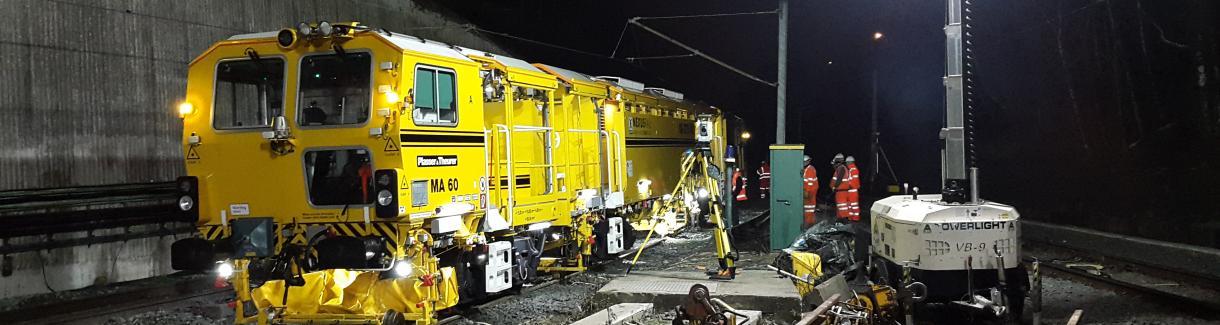
This involves making sure that the bed of stones, called ballast, supporting the Metro tracks is in good order and perfectly level. A large and slow-moving railway vehicle known as a tamper carries out this work, and may have to move back and forth across a single section for periods of up to an hour.
Metro staff walk every part of the track regularly, removing light rubbish and dealing with any vegetation causing an obstruction. At times larger specialist machines are used to cut back bushes and scrub.
It is important to keep the Metro track areas free of weeds – a programme of weed spaying is carried out every year in the late spring and early summer. The spray is contained well within the confines of the Metro track and the level of noise from this work is minimal.


