
Vegetation management
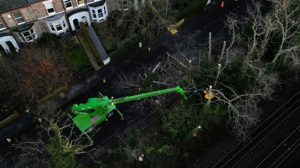
Looking after Metro’s trackside areas
Nexus are the infrastructure owner of the Tyne and Wear Metro network. They’re licensed and regulated by the Office of Rail and Road (ORR), and are under duties to maintain and enhance the operational railway across the Metro network, providing a safe operational railway for customers, stakeholders and other third parties impacted by its operation.
Around 120km of lineside estate across the network, as well as vegetation within stations, non-operational land, and neighbouring land is managed.
Work is focused within four metres of the track to ensure safety and access. In some cases, this may extend beyond this to maintain structures, remove hazardous trees, or support modernisation projects. While embankments are often wider, vegetation beyond this zone is often left untouched unless necessary.
Safety-critical work is prioritised and individual requests to remove trees or bushes cannot usually be accommodated unless it aligns with essential maintenance. However, if there are circumstances where vegetation on land or infrastructure is causing nuisance to third-party land, risks will be managed. Some vegetation near the railway may also be located on neighbouring land, and work is done with homeowners and councils to manage any risks.
Vegetation maintenance is essential for ensuring safety, operational efficiency, and environmental compliance. It applies to a diverse range of land types, including:
- Lineside: Areas next to railway tracks where vegetation can impact visibility, signalling, and infrastructure.
- Non-operational land: Railway-owned land not actively used but requiring management to prevent encroachment or ecological degradation.
- Stations and customer areas: Public-facing spaces where vegetation affects safety, accessibility, and visual appeal.
- Car parks and depots: Areas used by customers and staff where vegetation must be managed to maintain clear access, visibility, and safety.
- Third-party interfaces: Boundaries with private or public landowners where vegetation may influence or be influenced by railway operations.
A lot of vegetation management work takes place at night, and can be noisy. To be kept up to date with night working in your area, including vegetation management, sign up to receive weekly email updates by contacting Metro Customer Relations on customerrelations@nexus.org.uk.
Metro manage vegetation across the railway estate to uphold safety, operational reliability, environmental responsibility, and customer experience. Effective vegetation management is a legal and operational necessity that supports the long-term sustainability of the Tyne and Wear Metro network and associated infrastructure.
- Safety of operations and the public:
Overgrown vegetation can obstruct signals, signage, and sightlines, posing risks to train drivers and maintenance staff. Falling trees or branches can damage infrastructure or injure customers and the public. Proactive management reduces these risks. - Infrastructure protection:
Roots and overgrowth can damage track beds, drainage systems, and electrical equipment. Regular maintenance helps preserve the integrity of assets and reduces costly repairs. - Service reliability:
Vegetation-related incidents, such as fallen trees or blocked drainage, can cause delays and service disruptions. Managing vegetation helps ensure consistent and reliable service for passengers. - Legal and regulatory compliance:
Metro are required to comply with health and safety legislation, environmental regulations, and industry standards. This includes but not limited to obligations under the Wildlife and Countryside Act, the Health and Safety at Work Act, Office of Rail and Road (ORR) and the Forestry Commissioner. - Environmental Stewardship:
The aim is to balance operational needs with environmental responsibility. Vegetation management supports biodiversity, controls invasive species, and protects habitats, particularly on non-operational land and at third-party boundaries. - Customer experience and aesthetics:
Well-maintained vegetation at stations, car parks, and public areas contributes to a clean, safe welcoming environment for customers and the community.
Across the UK, vegetation-related incidents cost the rail industry over £100 million annually and cause thousands of hours of delays.
All staff and contractors are trained through professional training bodies to safely complete all aspects of the works. Several methods are used for vegetation management.
- Preventive maintenance: Regular, scheduled work to prevent problems before they occur.
- Corrective maintenance: Carrying out maintenance after an incident or extreme weather event.
- Predictive maintenance: Using data and analysis to anticipate potential failures and schedule maintenance proactively.
Tree owners in the UK have a legal “duty of care” to ensure their trees do not pose a danger to others. This involves regular inspections and necessary maintenance to identify and address potential hazards like falling branches or disease. Metro conduct regular tree inspections on all vegetation, which identifies hazardous trees/vegetation and provides us with an up-to-date inventory of vegetation owned.
Tree inspections are completed using proven methods and risk assessment that include railway risks and public risks. This risk assessment is the only railway approved risk assessment used by railway operators within the UK.
The vegetation inspections and risk assessments are carried out using an approved professional arboriculturist, and relies only on evidence of ill-health such as visual damage, disease, pests/fungus, and other factors.
The vegetation inspection also includes Ash dieback, which is an issue for all tree owners in the UK, where the airborne fungal disease is killing off certain species of Ash trees. The disease is widespread across the UK and is causing significant decline and death in ash trees, both in woodlands and other settings.
- Cutting back: Clearing vegetation to ground level within four metres of the track. Larger logs are left as animal habitats, and lighter material is chipped and left on site to encourage regrowth and habitats for smaller insects. This work is completed by using small equipment such as chainsaws, hedge cutters and brush cutters.
- Selective tree removal: Selective tree removal involves removing a tree that is problematic to the infrastructure or is a hazardous tree. This can be carried out by felling or by dismantling a tree using grapple saws, elevating platforms, tree climbing and other methods.
- Flailing: A rail-mounted flail removes lighter vegetation quickly during the night and during line closures. Though noisy, it reduces the need for extended night work.
- Weed spraying: Applying weed killer in spring to prevent growth through the track ballast and manage invasive species using approved herbicides.
- Emergency work: Respond 24/7 to remove fallen or dangerous trees that threaten the safety of the railway.
- Problematic vegetation: Vegetation that is causing damage/devaluation to neighbouring properties/land will be dealt with through the correct procedures. Typical work could include subsidence claims, branches damaging properties, and hazardous trees that affect the neighbouring properties or our infrastructure. Metro work directly with landowners and councils to ensure adequate access and permissions to carry out any work on neighbouring land, and typically costs will be paid by the landowner if the problematic vegetation is on neighbouring land.
- Replanting and meeting environmental goals: In some areas, Metro have partnered with communities to install bird boxes, bee hives, and community gardens. Allocated biodiversity sites on non-operational land for future replanting and ecological enhancement, have also been chosen.
Trees are inspected regularly, and as needed, using qualified arboriculturists. These inspections cover all Nexus land, lineside, stations, non-operational land, and neighbouring properties.
Inspections will also survey neighbouring trees. If there is a potential cause for concern and Nexus cannot inspect the tree fully, landowners will be notified. As inspections on trees on land not owned by Nexus cannot be completed fully, defects may not be picked up.
Hazardous trees will have the recommended maintenance works carried out and can include but not limited to; reduced, trimmed, or removed entirely. Sometimes, removing one tree exposes others to wind, making those healthy trees hazardous too.
This work often requires specialist equipment and is usually done at night or during major closures for safety reasons. However, provisions are in place to conduct hazardous tree removal during the day with adequate protection arrangements in place. All work completed on a hazardous tree follows the recommendations set out by the risk assessment and professional knowledge and competence of a qualified arboriculturist.
Metro embankments are valuable habitats, and there are steps to protect them:
- Work is scheduled outside the nesting season (September–March) where possible; however, if risks are unmanageable, work will proceed during the nesting season.
- Before starting works during nesting season, wildlife surveys are completed and checked again with competent staff before any vegetation management works start. With planned large-scale maintenance works, an ecology survey will be conducted.
- Active nests are left undisturbed, and protected species are managed in line with legislation. The specific size of the exclusion zone can vary, but a common recommendation is a minimum of five meters, with some species like tawny owls requiring a larger 100-meter buffer. All wild birds, their nests, and young are protected under the Wildlife and Countryside Act 1981.
- Local councils are liaised with in conservation areas and manage protected trees responsibly.
Log piles are left for insects and small animals and native hedgerow regrowth is encouraged. Work is staggered on either side of the track to allow wildlife to relocate safely.
In some areas, Metro have partnered with communities to install bird boxes, bee hives, and community gardens. Metro have also allocated biodiversity sites on non-operational land for future replanting and ecological enhancement.
A special conservation area has been created on the Metro network to protect a rare species of butterfly. The one-acre habitat at Howdon depot in North Tyneside was established after the former landfill site was found to be home to an increasingly rare butterfly called a Dingy Skipper.
Supporting and maintaining the biodiversity of our lineside estate is not just important for protecting ecosystems, but also for resilience against impacts of climate change. Public transport infrastructure is increasingly affected by extreme weather events associated with a changing climate, and by supporting biodiversity and maintaining efficient vegetation management we can enhance the ability of the railway to recover and withstand increasing climate change impacts. Railway ecological corridors can act as a natural buffer with wider positive effects for flood or landside mitigation, supporting cleaner air for communities, and encouraging carbon sequestration, where trees and vegetation remove carbon from the atmosphere.
For essential safety work, advance notice is provided via this website and via local councillors.
For larger projects—such as new stations or community-requested work—we carry out full consultations and consider all feedback.
We assess the impact of every project, prioritising customer safety and satisfaction while also considering wildlife and community concerns. Although some residents worry that tree removal increases noise, research shows that only dense vegetation (15 metres deep or more) significantly reduces sound—something rarely possible along Metro routes. In addition to this, noise levels will be noticeably reduced with the new fleet of Metro trains.
Vegetation maintenance can be noisy, and we aim to keep our work as quiet as possible. To minimise service disruption, work often takes place during the night, so the network can remain open during the day. Some works may also require temporary road or footpath closures, which are listed on local council websites and national highways websites.
Nexus’ customer relations department can help with any enquiries, complaints, and proposals. Get in touch here.
Many requests are received, but due to limited resources and focuses on safety-critical work, Nexus can only carry out vegetation removal when it can be carried out alongside essential maintenance in the same location, affects the safety of all individuals on or near the Metro network, the removal of health and safety hazards or when works are required to prevent a legal nuisance in respect of third-party property.
As a guide, works that won’t be considered are:
- Shaded/reduced light to properties
- Signal loss to TV/satellite reception
- Obstructed views
- Interference with other vegetation
- Obstruction or contact with telephone lines
- Perceived risk or worry of trees regarding their size and/or height
- Minor/seasonal nuisances (vegetation growing over fence etc)
- Leaf, fruit, twig, or flower shedding
- Aphid excretion (honeydew)
- Bird droppings
- Leaf, fruit, twig, or flower shedding
- Germinating seedlings in gardens
- Aesthetic preference or opinion (‘untidiness’)
While it is appreciated that these issues may cause real concern to some residents, they would not usually be considered as a health and safety risk or safety critical risk – however, exceptions may be made on a case-by-case basis.
Where there is a genuine inconvenience and/or distress, attempts will be made to look at an alternative approach to the rectification and management of the vegetation causing the issue.
Appeals:
If you feel like the decision made regarding your complaint about vegetation was inadequate, please contact Customer Relations at customerrelations@nexus.org.uk
Vegetation is managed to ensure the safe and reliable operation of Metro services. Overgrown trees and bushes can obstruct signals, damage infrastructure, or fall onto tracks and power lines. Leaves from certain trees also cause slippery rails, leading to delays and safety risks.
No. Vegetation is only removed within four metres of the track (the operational envelope), unless additional clearance is needed for safety, maintenance, or access. Trees beyond this zone are usually left untouched unless they pose a risk.
Nexus receive many requests like this, but due to limited resources and our focus on safety-critical work, we can only carry out vegetation removal when it aligns with essential maintenance, affects the safety of individuals on or near to the Metro network, the removal of health and safety hazards or when works are required to prevent a legal nuisance in respect of third-party property.
Vegetation maintenance close to the tracks can be loud, especially when using specialised plant and equipment. Although Nexus reduce the amount of noise emitted from their works, this can still be disruptive, but necessary to ensure the safety of the railway and lineside neighbours. For example, during night works, electric equipment is used where possible to reduce noise pollution.
No. You are not permitted to trespass onto a live railway to collect logs from cut trees. Failure to comply with this will result in a trespass fine, and potentially other charges for removing assets from the live railway.
Nexus take ecology seriously. Work is scheduled outside the nesting season where possible, and active nests and bat roosts are protected. Log piles are left for insects and small animals and encourage the regrowth of native hedgerow species.
Research shows that only dense vegetation (15 metres deep or more) significantly reduces noise. Most Metro embankments are not wide enough to provide this level of sound insulation. However, Nexus understand concerns and aim to minimise disruption during works. In addition to this, with the new Class 555 Metro, noise levels will be noticeably reduced.
Work may occur during the day, at night, or during planned line closures. Night work helps us keep the network running during the day. We notify residents in advance of any noisy or disruptive work.
Nexus’ work covers all parts of the Metro network in Newcastle, Gateshead, North and South Tyneside, and stations only between Pelaw and South Hylton. The tracks between Pelaw and South Hylton are owned and maintained by Network Rail, and Nexus only provide information on station improvement works on this section of the line.
You can keep up to date by:
- Signing up to receive weekly night working email updates by contacting Metro Customer Relations at customerrelations@nexus.org.uk
You have the legal right to maintain any vegetation, such as branches from a neighbouring tree, that is over growing onto your property. It must be taken with safety in mind, to ensure you do not cause unknowing or purposeful damage to the neighbouring tree.
When cutting back vegetation from your property, you must safely give back the prunings to the tree owner or ask permission to dispose of the prunings yourself. In this instance, we give you permission to dispose of the prunings yourself, in accordance with local council waste policies and regulations.
At no point should you cut back the vegetation further than the boundary line, and must not trespass onto the neighbouring land of the tree’s owner. It is recommended that you use a suitably qualified professional tree surgeon to carry out any works you cannot.
You will also have to inform Nexus of your works, so we can give permission to the works, and provide adequate protection from the live railway.
If you are a landowner, with trees planted within your property, you have a legal responsibility to inspect and maintain your tree, to prevent it causing foreseen damage or injury to neighbouring properties (and/or people), including the railway.
If you have a tree that is a concern, please use a qualified professional arboriculturist to inspect your tree/s and carry out any recommendations required. The carrying out of works near a railway is governed by general health and safety legislation, such as the Health and Safety at Work etc. Act 1974, and by specific rail legislation enforced by the Office of Rail and Road (ORR).
These obligations apply in the same way to the owners of 3rd party land that sits next to the railway as they do to Nexus itself. This means that, where members of the public or contractors instructed by them are carrying out works close to railway land, there is a legal duty upon them to consult and engage with Nexus as infrastructure owner/maintainer. Nexus may, during those consultations, require that certain asset protection measures be put in place for the safety and security of all involved in carrying out the works, or who may be impacted by those works.
This is a standard set for all railways registered and licenced by the Office of Rail and Road (ORR) within the UK.
If you do own a tree, it is recommended that you take time to read this document attached, as this explains how vegetation can impact on the railway, and the consequences of ill managed trees.
If you notice a tree that appears hazardous or at risk of falling onto the railway, please contact Metro Customer Relations team immediately on 0191 20 20 747. Their arboriculturists inspect and respond to such risks as a priority.
If you notice a tree that has fallen onto the track or overhead line, and has the potential to cause a fatal incident, please immediately contact Metro Control Centre on 0191 203 3090. You should state that this is an emergency call, and inform the controller of your name, location and what the issue is.
In the first instance, customers, neighbours, and third- party landowners are asked to contact the Metro Customer Relations Team in connection with any routine/non-urgent communications about vegetation management.
In connection with more serious issues of nuisance or potential nuisance connected with vegetation management, please speak to independent legal advisors in the first instance about the matter. Advice may be available to you from The Citizen’s Advice Bureau or similar agencies. If you need to submit formal correspondence to Nexus on this matter, this should be sent in writing (i.e. by formal letter) to the Head of Legal Services at Nexus.


